
Industry Update: Why Spanish Electricity Prices Are Rising Again Despite Record Solar Production
Even with abundant sunshine and renewable generation, Spain remains vulnerable to global events. We explore why electricity prices are climbing again.
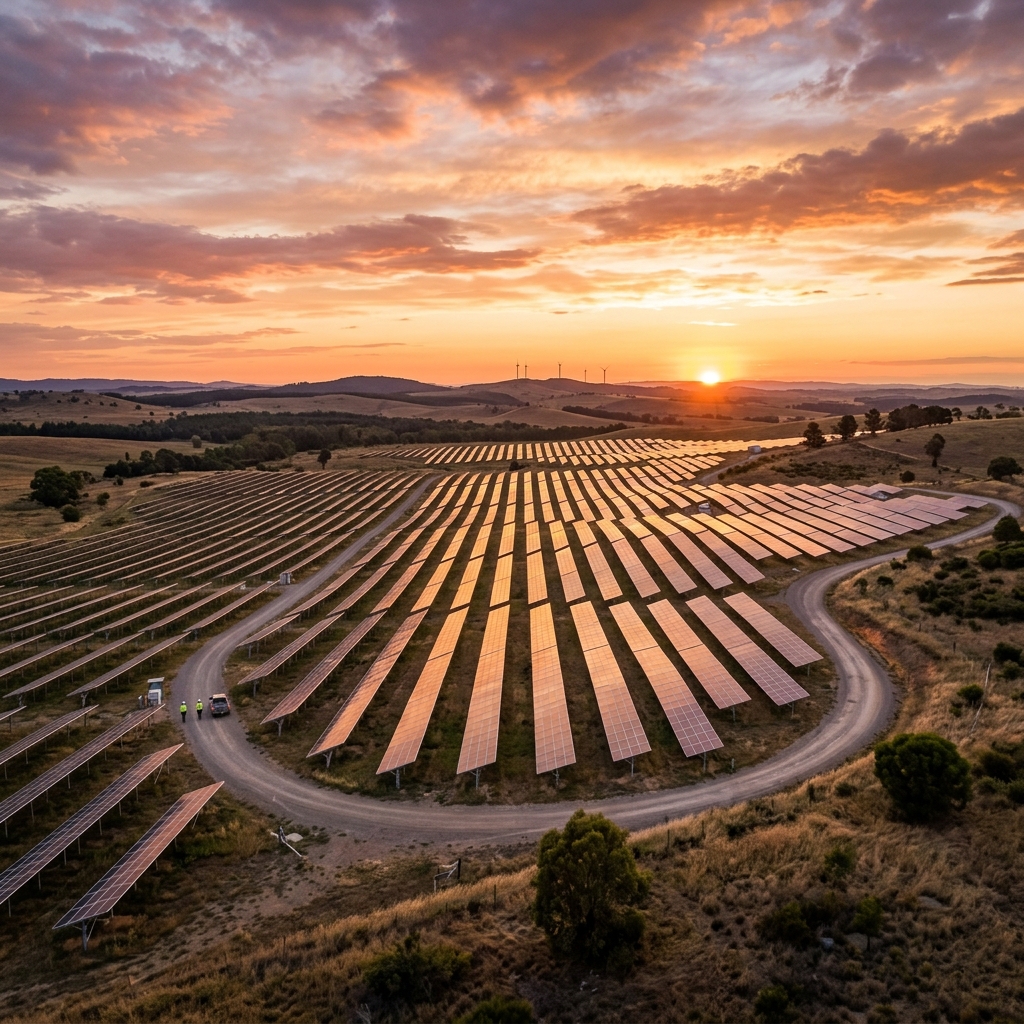
At first glance, Spain’s electricity market appears to be in excellent health.
Solar farms are producing record amounts of energy. Reservoirs are comfortably full after a wet winter. Renewable energy now provides the majority of Spain’s electricity.
So why are electricity prices climbing again?
The answer highlights one of the great paradoxes of the modern energy market. Even with abundant sunshine and renewable generation, Spain remains vulnerable to global events happening thousands of kilometres away.
Wholesale prices have more than doubled
The average wholesale electricity price during May 2026 was approximately €54/MWh, compared with just €21/MWh during the same month last year.
The monthly average does not tell the whole story. Prices have been extremely volatile, with some days trading close to €20/MWh while others have surged towards €90/MWh. The pattern is becoming increasingly familiar. Cheap electricity floods the grid during sunny hours, only for prices to rise sharply after sunset when demand remains high but solar production fades. (Haya Energy Solutions)
This intraday volatility is now one of the defining characteristics of the Spanish electricity market.
Geopolitics still matters
The recent increase in prices is closely linked to higher natural gas costs.
Tensions in the Middle East, particularly involving Iran and concerns over shipping through the Strait of Hormuz, have kept European gas prices elevated. Although Spain now relies far less on gas than it did a few years ago, gas-fired power stations still play a crucial role in balancing the grid.
When renewable production falls short, combined cycle gas plants step in to meet demand. Under Europe’s marginal pricing system, the most expensive technology needed to satisfy demand often sets the market price for everyone.
This means that even if gas only provides a relatively small share of total generation, expensive gas can still lead to expensive electricity. (Idealista)
Solar is winning the long-term battle
There is also a positive side to this story.
Spain’s solar revolution continues at an astonishing pace.
Solar photovoltaic generation increased by around 28% compared with 2025, making it the country’s single largest electricity source during May and accounting for roughly 28% of all electricity generated.
Meanwhile, renewables as a whole supplied more than 60% of Spain’s electricity.
This rapid growth is changing the structure of the electricity market.
Only a few years ago, gas frequently dictated wholesale prices. Today, the influence of gas has fallen dramatically as solar and wind increasingly dominate the daytime hours. Independent analysis suggests gas set the market price in only a small minority of hours during the first half of 2026, compared with over half of all hours in 2021. (The Guardian)
Spain’s investment in renewable energy is clearly paying off.
So why aren’t prices lower?
The missing piece of the puzzle is storage.
Spain currently has more than enough solar energy during many daylight hours. In fact, wholesale prices occasionally approach zero and can even become negative for short periods.
The problem is that electricity cannot yet be stored at scale cheaply enough to cover the evening peak.
Once the sun sets, the system must quickly ramp up other technologies such as hydro, nuclear and gas-fired generation. If wind production is low or hydro output is reduced, prices can rise rapidly.
This effect was especially noticeable during May.
Despite reservoirs being exceptionally healthy, hydroelectric generation was significantly lower than during the same period in 2025. Wind generation was also weaker, forcing greater reliance on backup technologies. (Haya Energy Solutions)
What does this mean for consumers?
For households and businesses, there are several important takeaways.
First, the era of ultra-cheap wholesale prices seen during parts of 2025 appears to have passed, at least for now.
Second, indexed tariffs remain attractive for many customers because they directly follow the wholesale market. Customers who can shift consumption towards cheaper daytime hours may continue to benefit.
Third, higher wholesale prices often work in favour of solar owners.
Export compensation schemes in Spain are generally linked to market prices. When wholesale prices rise, the value of exported solar energy tends to increase as well.
Finally, fixed tariffs are becoming harder for suppliers to price competitively. Many providers have quietly increased their rates during 2026 to protect themselves against continued market volatility.
Are you overpaying for electricity?
Upload your last bill. Our AI will scan every line to find your cheapest possible tariff in Spain.
The bigger picture
The Spanish electricity market is undergoing a profound transformation.
A decade ago, Spain was often criticised for high electricity costs and an uncertain renewable strategy.
Today, it has become one of Europe’s renewable success stories.
Yet the transition is not finished.
The next challenge is no longer producing enough clean electricity. It is learning how to store it, transport it and use it more intelligently.
Until then, consumers should expect electricity prices to remain more dynamic than ever, with cheap sunny afternoons, expensive evenings, and a market increasingly shaped by both local weather and global politics.
Sources:
- OMIE Daily Market Prices
- Red Eléctrica de España (REE) Market and Generation Reports
- Haya Energy Spanish Market Analysis, May 2026
- Ember European Electricity Review 2026
- International Energy Agency Electricity 2026 Outlook