
Why your Spanish electricity bill went up after the blackout: grid ‘adjustment services’ explained
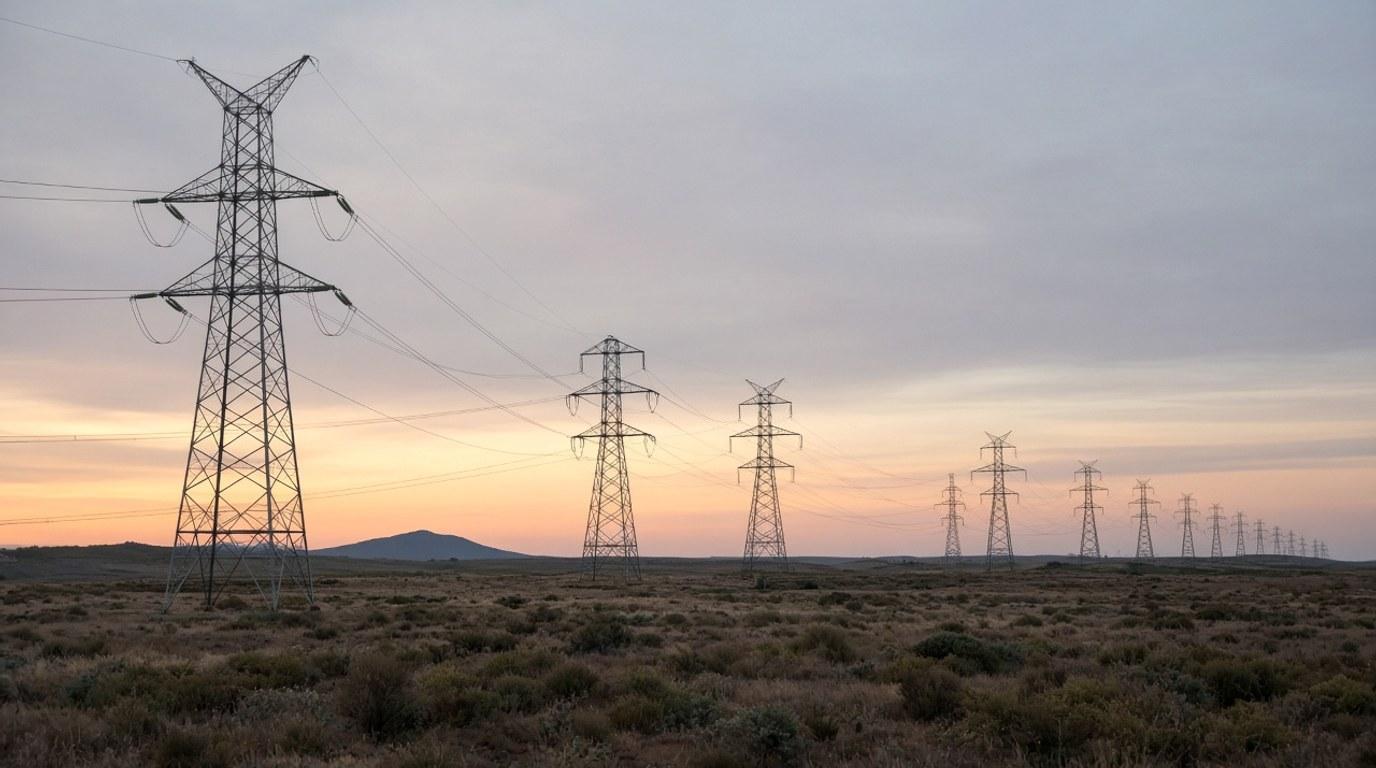
After the 28 April 2025 Iberian blackout, many households kept paying more for electricity in part because system “servicios de ajuste” costs rose. These are regulated costs of keeping the grid in balance. They are passed through every bill, and switching supplier does not remove them.
Press reports have put euro totals on these household costs. Those figures are not official Red Eléctrica household statistics, and they are not used on this page. What official sources do establish is the mechanism: the costs are system-wide, they sit inside the energy price, and switching supplier does not remove them.
What happened on 28 April 2025
A widespread blackout affected the Iberian grid on 28 April 2025. The causes are not the subject of this page. For the event itself, see weSwitch’s blackout newsletter, which covers the outage and grid-resilience lessons rather than a long household-cost section on servicios de ajuste.
What matters for the bill is what happened afterwards. Keeping a large power system stable after a shock, and then in a tighter operating environment, can mean more use of the tools the system operator already has to balance generation and demand. Those tools have a cost, and that cost is socialised into consumer prices. This page names that mechanism and separates it from the other things that also move a bill.
What “servicios de ajuste” are
Red Eléctrica, as system operator, has to keep generation and demand in balance in real time, every day of the year. Electricity cannot be stored in large quantities on the system as a whole, so the operator works around the clock. Spanish rules give it a set of tools for that work: the servicios de ajuste. On Red Eléctrica’s official explainer, those tools include the resolution of technical constraints (restricciones técnicas) and balancing services such as secondary and tertiary regulation.
Technical constraints arise when the result of the wholesale market is not compatible with the physical grid: a line that would be overloaded, a voltage that needs to be held, or a local need that only certain plants or storage can meet. The operator then adjusts programmes, reducing some production and increasing other production, so that the system stays within its safety rules. Red Eléctrica’s own explainer is clear that the price paid for that energy is set by the offers of the providers, not by the operator naming a commercial tariff of its own.
Secondary regulation is an automatic service that corrects deviations from programme and frequency deviations, acting between about 20 seconds and 15 minutes, and is paid both for being available and for the energy used. Tertiary regulation is used to cover remaining imbalances and to restore secondary reserve; it is defined as the power a unit can deliver within 15 minutes. Both sit inside the family of adjustment services. The official page also describes other flexibility tools, including demand-side response in defined situations. This article does not need every technical label; the point for a household is that these are regulated system services, not a retailer add-on.
Providers who supply those services are paid through regulated market mechanisms. The cost is socialised into the electricity prices paid by consumers. It is not a discretionary fee invented by your retail supplier. Red Eléctrica’s own materials distinguish those payments to providers from the system operator’s separately regulated income. The operator does not pocket the adjustment-energy bill as a commercial profit.
How the cost reaches your bill
On PVPC, adjustment costs flow into the monthly energy price in euros per kWh. The regulated price is built from several components, including energy and system costs, and it changes. You will not usually see a separate, friendly line that says “servicios de ajuste” on a PVPC bill. You will see the energy price move.
On a fixed or other free-market tariff, the supplier builds expected adjustment (and other) costs into the offered energy price, and may revisit that at renewal or when the contract is updated. Again, you rarely see a labelled line. You usually just see a higher energy price, or a new price at renewal.
That is why people often blame “the company” or look for a blackout tax. The supplier is collecting a system cost that it did not invent. Whether a supplier is allowed to change a fixed mid-term price by pointing at these costs is a different legal question, covered in the price-change guide. The cost itself still exists in the system either way.
Why this page does not quote a household euro total
Red Eléctrica explains what the services are and how they are paid for. It does not publish an official “typical home” euro figure that we can responsibly repeat as fact. WeSwitch has not calculated one either. Your own cost depends on how much energy you used and on how the cost was passed through on your tariff — on PVPC inside the monthly energy price, and on many free-market deals inside the offered kWh price.
What else has been moving bills
Wholesale energy prices and tax changes also moved bills. Adjustment costs are one piece, not the only one. A month with a tight gas or wholesale market can raise PVPC and indexed bills even if adjustment costs are stable. A change in VAT or electricity duty can raise or lower the tax on an otherwise identical bill.
Ordinary VAT on the Peninsula and in the Balearics is 21%, and the ordinary electricity excise duty listed by AEAT is 5.11269632%. Those ordinary rates are the ones that apply in November 2026. Real Decreto-ley 25/2026, articles 18 to 21, provided for a temporary cut later in 2026 if the annual variation of the INE electricity index exceeded 15%. That threshold was not met: the definitive annual variation was 11.4% in September 2026 and 11.1% in October 2026 (INE series IPC291482, Nacional. Electricidad. Variación anual), so no November or December 2026 reduction was activated. (RDL 25/2026.) Network charges (peajes and cargos) and contracted power are separate again. If you want to see how a bill is built, use Spanish electricity bill explained and how electricity prices work in Spain.
The useful habit is to split the bill into buckets: system and wholesale energy, regulated network and tax items, contracted power, the supplier’s commercial offer, and optional extras. Switching can touch some of those buckets. It cannot delete servicios de ajuste from the system.
Can switching supplier or tariff avoid these costs?
No. The costs are system-wide. They show up in PVPC energy prices each month, or inside the energy price of fixed and other free-market deals. Switching can still change the supplier’s commercial margin, your contracted power, the shape of the tariff, and optional add-ons. It does not erase servicios de ajuste from the system or from the energy component of your bill. WeSwitch will not promise to “remove the blackout charge”.
That is not an argument against comparing offers. It is an argument for comparing them honestly. If two free-market offers price expected system costs differently, or if one has a lower margin or a better fit to your hours of use, the comparison can still matter. It will not take the adjustment mechanism off your bill.
Domestic customers can switch at any time. The new supplier handles the changeover, and the power is not cut. Those facts remain true even when part of the bill is a system cost you cannot shop away.
What you can still do
- Upload a recent bill and compare real offers, knowing that adjustment sits inside the energy price. Any saving depends on your usage and your current contract.
- Check whether contracted power (potencia) is larger than the house needs. Standing charges continue whether or not adjustment costs are high.
- If you are on PVPC or an indexed tariff, shifting some use into cheaper hours can still help. Time-of-use shape does not remove system costs, but it can change how much energy you buy at expensive times.
- Read the bill with Spanish electricity bill explained, so you are not attributing every movement to one cause.
- If you have received a letter saying your contracted price or conditions are changing, treat that as a supplier-initiated change and use the price-change guide. That is a different path from a bill that rose with no letter.
Related reading: how to lower your bill and electricity price trends.
FAQ
Why is my electricity bill higher after the April 2025 blackout? Part of the rise comes from higher servicios de ajuste, the regulated costs of keeping the grid balanced, which are passed through to all consumers. Wholesale energy and tax changes also moved bills. WeSwitch does not publish a single household euro total for these costs, because there is no official typical-home figure to cite.
What are servicios de ajuste and who sets them? They are the market mechanisms Red Eléctrica uses as system operator to balance generation and demand and to manage technical constraints, including secondary and tertiary regulation. Providers are paid for the services; the cost is socialised into consumer prices. They are not a discretionary fee invented by your retail supplier.
Can I avoid them by switching supplier or tariff? No. Switching can still improve margin, potencia or tariff shape, but it does not remove adjustment services from your bill’s energy component.
Why don’t I see a line called “servicios de ajuste” on my bill? On PVPC they are folded into the monthly energy price. On many free-market deals they are built into the offered kWh price. You usually see a higher energy price, not a labelled surcharge.
Is this the same as a supplier writing to change my fixed price? No. System costs can move what you pay without a contract-change letter. A letter that changes your contracted price or terms is a different process, with its own notice rules.
Sources
- Red Eléctrica, “Servicios de ajuste del sistema”: https://www.ree.es/es/operacion/garantia-suministro/servicios-ajuste
- Red Eléctrica, restricciones técnicas explainer: https://www.ree.es/es/operacion/garantia-suministro/servicios-ajuste/restriciones-tecnicas
- Real Decreto-ley 25/2026, articles 18–21 (BOE-A-2026-20265): https://www.boe.es/buscar/act.php?id=BOE-A-2026-20265
- AEAT, electricity excise duty 5.11269632%; INE series IPC291482 (Nacional. Electricidad. Variación anual).